
Bin Cleaning That Keeps Pests and Odors Away
Professional bin cleaning removes odors, grease, and pest attractants, helping homes and businesses easily maintain cleaner, safer waste areas year-round.
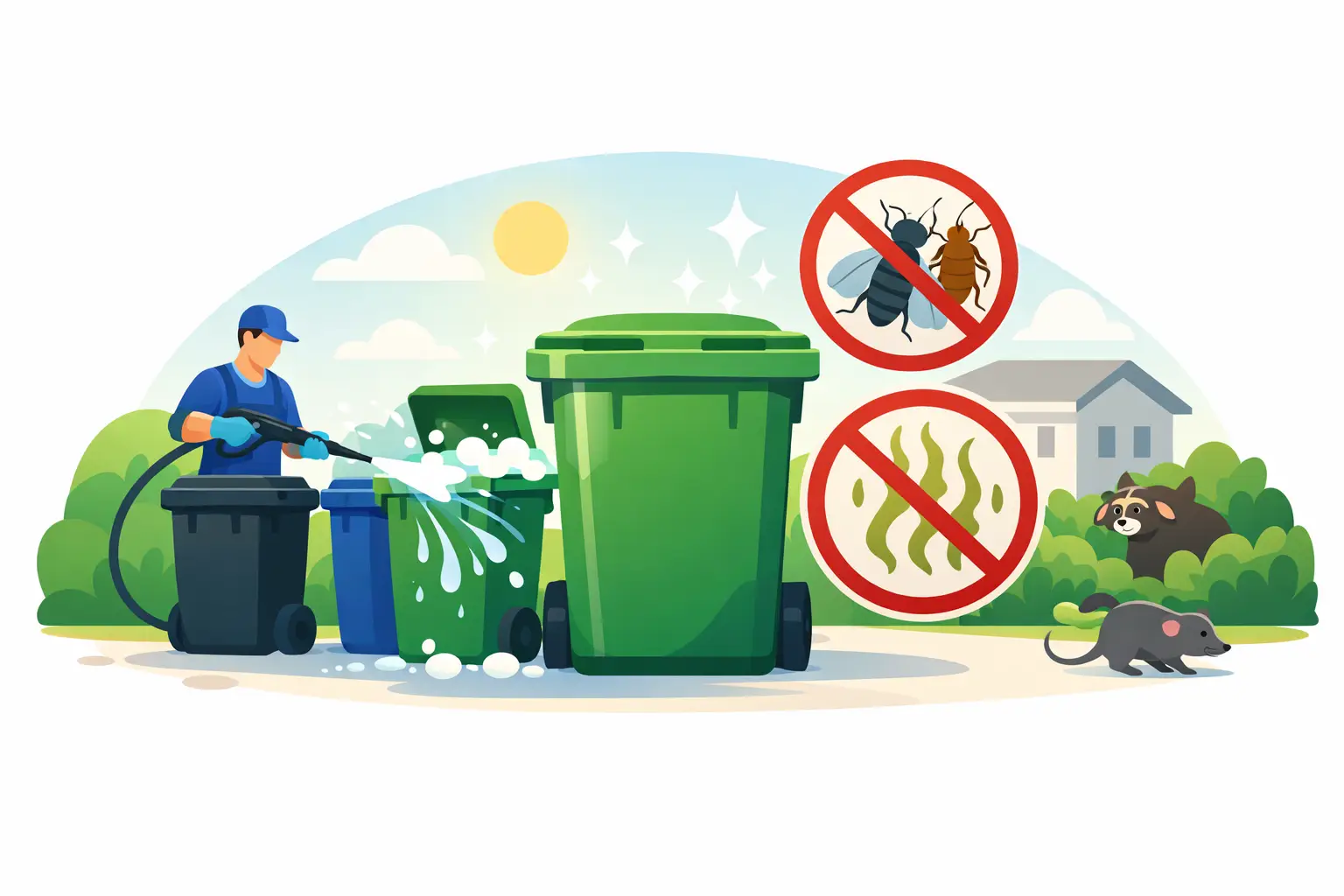
A garbage bin can look empty and still create a property problem. Residue beneath a liner, spilled liquids in the lid, and food waste stuck along the sides create odors that spread quickly in warm weather. They also give flies, rodents, cockroaches, ants, and wasps a reason to stay close. Professional bin cleaning removes the buildup that a quick rinse often leaves behind, helping protect the areas where people live, work, eat, and shop.
For homeowners, the issue may be a foul smell near the garage or an increase in flies around the yard. For restaurants, offices, apartment buildings, factories, and retail locations, dirty bins can affect customer impressions, employee comfort, pest-control efforts, and day-to-day sanitation standards. The bin is not separate from the property hygiene plan. It is one of the places where that plan starts.
Why dirty bins attract pests
Trash bins collect more than garbage. They hold food residue, grease, moisture, organic debris, and bacteria. Even when bags are tied properly, leaks and torn liners leave material behind. Over time, residue coats the bottom, corners, wheels, and lid hinges, creating a sheltered food source for pests.
Flies are usually the first obvious sign. They are drawn to decaying food and can breed in moist organic material. Ants may follow sweet spills, grease, or pet food containers. Rodents are attracted by accessible food waste and may chew damaged lids or linger around overflowing bins. Cockroaches can use cracks, debris, and moisture around waste areas as hiding places. In some locations, wasps may also investigate sweet drink containers and food scraps.
Cleaning the area around a bin helps, but it does not solve the problem if residue remains inside. A bin that looks acceptable from the outside can still produce odors and attract activity every time the lid is opened. Regular sanitation reduces those attractants and supports any pest prevention program already in place.
What professional bin cleaning should remove
Effective bin sanitation is more than spraying water into a container. The goal is to break down the material pests feed on and eliminate the odor-causing residue left after garbage pickup. That requires attention to the full bin, including places that are easy to miss during routine cleanup.
A thorough service generally addresses the interior walls, base, lid, rim, handles, wheels, and exterior surfaces. Grease and stuck-on waste need more than a light rinse. The bin should be washed with appropriate cleaning products, pressure where needed, and a deodorizing or sanitizing treatment suited to the waste type and property setting.
The right method depends on the bin. A household cart may need periodic deep cleaning after collection days. A restaurant dumpster may require a more structured schedule because food waste, grease, packaging, and high volume create faster buildup. Industrial properties may have different waste streams and site rules that need to be considered before cleaning begins.
A responsible service provider also avoids simply moving contaminated runoff into a storm drain or across a parking lot. Wastewater handling matters, particularly in commercial areas where cleanliness, safety, and environmental responsibility are all part of the job.
When does a bin need cleaning?
There is no single schedule that fits every property. The best frequency depends on what goes into the bin, how often it is collected, local weather, whether it is stored indoors or outdoors, and how much pest pressure the property experiences.
For many homes, seasonal deep cleaning or cleaning every few months can make a noticeable difference. More frequent service may be worthwhile after a bag leak, a pest issue, a long hot spell, or disposal of spoiled food. Households with diapers, pet waste, or frequent food waste may also need cleaning more often.
Commercial locations usually benefit from a scheduled program rather than waiting for odor or pest activity. Food service businesses, cafés, multi-unit properties, schools, offices with shared waste areas, and facilities with employee break rooms can accumulate residue quickly. In these settings, monthly or more frequent bin cleaning may be practical, especially during warmer months.
The warning signs are straightforward: persistent odor after trash pickup, visible residue, flies gathering near the lid, maggots, sticky handles, liquid pooling at the bottom, or rodents seen around the waste area. Waiting until the smell becomes overwhelming gives pests more time to establish themselves nearby.
Bin cleaning for homes and businesses
Residential bin cleaning is about restoring comfort around the home. A clean bin reduces odors near garages, patios, gates, and side yards. It also makes it easier to identify problems such as cracked lids, damaged wheels, or bins that no longer close securely. Those small repairs can matter because a tight-fitting lid limits pest access and keeps rainwater from collecting inside.
For businesses, the benefits are broader. Clean bins help maintain a better first impression near entrances, loading areas, patios, and parking lots. They can reduce slips caused by leaking waste, improve conditions for staff handling trash, and support sanitation expectations during routine property checks. For restaurants and cafés, cleaner waste areas can be especially valuable because food-related pests often begin outside and move toward the building.
Property managers face an additional challenge: shared bins can become a recurring source of tenant complaints. Odor, flies, and overflowing waste affect multiple residents at once. A scheduled cleaning plan, paired with clear waste-disposal expectations, can reduce complaints and help keep common areas more pleasant.
Cleaning bins without creating another problem
A garden hose can help with a minor spill, but it has limits. Cold water does not always remove grease, and household products may mask odors without removing the source. Cleaning a heavily soiled bin by hand can also expose staff or residents to bacteria, sharp objects, and contaminated liquids.
Professional cleaning is especially useful when bins are large, repeatedly soiled, or connected to ongoing pest activity. Trained technicians can assess the condition of the container, use the appropriate equipment, and explain whether sanitation alone is enough or whether pest treatment and exclusion steps are also needed.
That distinction matters. Bin cleaning reduces the food and odor that draw pests in, but it cannot repair a broken dumpster enclosure, close gaps around a building, or eliminate an established rodent or cockroach infestation indoors. The strongest results come from combining sanitation with proper waste storage, secure lids, prompt repairs, and targeted pest management when required.
Simple habits that keep bins cleaner longer
Professional cleaning works best when daily waste handling supports it. Bag food waste securely, avoid placing loose liquids in containers, and rinse food containers when practical before disposal. If a bag leaks, clean it promptly rather than allowing residue to dry at the bottom.
Keep lids closed whenever possible. An open lid invites rainwater, insects, birds, and animals. It also allows odors to travel farther. For commercial sites, make sure employees know where waste belongs and avoid stacking bags beside a full dumpster. Bags left on the ground are easier for pests to reach and can create a problem even when the bin itself is clean.
It also helps to inspect the surrounding area. Remove loose debris, clean spills near the enclosure, trim vegetation that gives rodents cover, and report damaged lids or gaps in waste storage areas. These steps are simple, but they make professional sanitation and pest-control services more effective.
A cleaner waste area supports the whole property
Bin cleaning is often treated as an afterthought until smells, flies, or rodent activity make it impossible to ignore. A planned approach is easier on the property, the people using it, and the business or household responsible for it.
North Peace Pest Control and Maintenance Corporation can help property owners address dirty bins as part of a broader sanitation and pest-prevention plan. Whether the concern is a single residential cart, a shared apartment waste area, or a commercial dumpster that needs regular attention, the right service should be clear, practical, and matched to the conditions on site.
A clean bin will not just smell better. It gives pests fewer reasons to come closer, helps waste areas look cared for, and makes the rest of the property easier to protect.