
How to Identify Termite Damage Before It Spreads
Learn how to identify termite damage, separate warning signs from look-alikes, and know when a professional inspection can protect your property early.
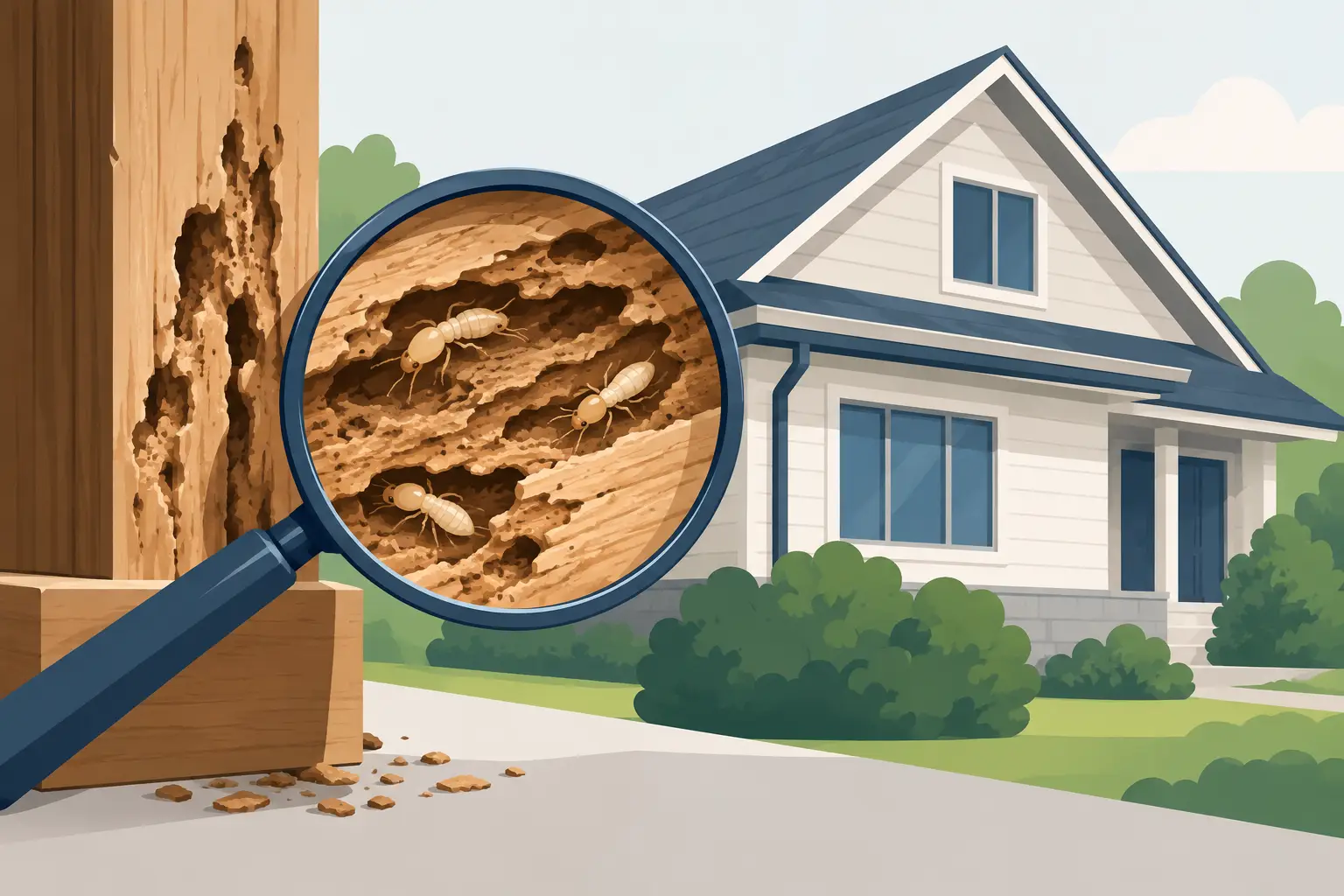
A door that suddenly sticks, a soft spot near a baseboard, or a thin line of dried mud on a foundation can seem like separate maintenance issues. They can also be early clues of a serious wood-destroying pest problem. Learning to identify termite damage gives homeowners and property managers time to act before hidden damage becomes a costly repair.
Termites work out of sight. Unlike rodents or cockroaches, they do not usually leave obvious activity in the open. Many infestations are found only after the insects have been feeding inside framing, trim, flooring, or other wood materials for months or longer. A careful inspection can help separate a minor surface issue from a problem that needs professional attention.
What Termite Damage Usually Looks Like
Termites eat wood from the inside out. This is why a board, door frame, or piece of trim can look normal from the room while its interior has been weakened. Damage often follows the grain of the wood and may leave a thin painted or finished surface behind.
When you press gently on a suspect area, it may sound hollow or feel soft. In more advanced cases, the wood can crumble, buckle, or break through with very little pressure. Do not force open walls, floors, or trim to investigate. Disturbing the area can create unnecessary repairs and may make it harder to understand the full extent of the activity.
Subterranean termites, a common concern in many parts of North America, need moisture and usually travel between soil and a building through protected pathways. Drywood termites live inside dry wood and leave different evidence. The signs can overlap, so the location of the damage matters as much as the damage itself.
7 Signs That Help Identify Termite Damage
Some signs point strongly toward termites, while others are only reasons to take a closer look. Watch for several clues together rather than relying on one symptom alone.
- Mud tubes on foundations, crawl spaces, or walls. These pencil-width tunnels are made from soil, wood particles, and saliva. Subterranean termites use them to stay protected while moving between the ground and a food source. Breakage in a tube does not prove the colony is gone. Termites can rebuild it quickly or travel through another route.
- Wood that sounds hollow or feels thin. Tap baseboards, exposed framing, porch posts, window trim, or basement woodwork. A hollow sound does not always mean termites, but it deserves attention when paired with other signs.
- Blistered, bubbling, or buckling paint. Moisture and termite activity beneath a painted surface can make it look like water damage. Check nearby areas for tubes, soft wood, leaks, or other moisture sources before assuming the cause.
- Tight-fitting doors and windows. Termite feeding and the moisture associated with an infestation can warp wood. Doors and windows also stick because of humidity, settling, or seasonal expansion, so this sign is a prompt to inspect, not a diagnosis.
- Small piles of pellet-like droppings. Drywood termites push tiny, hard pellets called frass out of small openings in infested wood. The pellets can resemble fine sawdust, coffee grounds, or pepper. Their uniform, faceted appearance is a useful distinction.
- Discarded wings near windows, doors, or lights. Reproductive termites swarm when conditions are right and then shed their wings. A pile of matching wings may indicate termites nearby. Flying ants also shed wings, so look closely: termite wings are similar in length, while ant wings are noticeably different sizes.
- Visible damage in wood near moisture. Pay close attention to areas around plumbing, roof leaks, poor drainage, crawl spaces, utility penetrations, and exterior wood that contacts soil. Moist conditions make a property more attractive to termites and can also speed up wood decay.
Termite Damage or Something Else?
Not every damaged board is termite damage. Carpenter ants excavate galleries in damp or decaying wood but do not eat it. Their tunnels tend to look smoother and cleaner than termite galleries, and they may leave coarse, sawdust-like debris that can include insect parts.
Wood rot is another common look-alike. Fungal decay is often linked to long-term moisture and can make wood soft, dark, cracked, or stringy. Rot can exist without termites, but the moisture problem causing it may also create favorable conditions for pest activity. Treating only the visible wood without correcting the water source can lead to repeat problems.
Old construction damage, settling, and poorly installed trim can also cause cracks, gaps, and sticking doors. That is why a qualified inspection is more reliable than trying to identify an infestation from one photograph or a single damaged spot. The goal is to determine what is active, what is old, and what conditions may be putting the structure at risk.
Where to Check First
A practical inspection starts where termites are most likely to find food, moisture, and hidden access. Walk slowly around the exterior and look at the foundation, siding, steps, decks, porch posts, fence connections, crawl-space entries, and areas where utility lines enter the building.
Keep soil, mulch, and landscaping materials below siding and exterior trim. Wood touching the ground creates an easy bridge to the structure. Firewood, lumber, cardboard, and stored wood debris should be kept away from the building and off the ground when possible.
Inside, inspect basements, utility rooms, laundry areas, under-sink cabinets, garages, and rooms with exterior walls. Check around water heaters, floor drains, plumbing lines, and windows. In commercial properties, include storage rooms, loading areas, mechanical rooms, and locations where pallets, cardboard, or wood materials are held against walls.
For landlords, restaurant operators, office managers, and facility supervisors, routine inspections should be part of broader property hygiene and maintenance planning. A small moisture issue behind a wall can become both a structural concern and a disruption to operations if it is left unresolved.
What to Do When You Find a Warning Sign
Start by documenting what you see. Take clear photos from a distance and close up, and note the location and date. If you find wings or pellets, collect a small sample in a sealed container rather than vacuuming everything up immediately. This can help a technician distinguish termites from ants or other pests.
Avoid spraying store-bought insecticide into holes, tubes, or damaged wood. Surface sprays rarely reach the colony, and they can drive activity into less visible areas. Do not remove mud tubes before an inspection unless there is an immediate safety or repair reason. Their location can provide useful information about termite travel routes.
If wood is severely soft, sagging, or close to an electrical outlet, plumbing line, stairway, or load-bearing area, keep people away from it until it can be assessed. Pest treatment and structural repair are related but separate jobs. Eliminating active termites protects the property from further feeding, while a qualified repair professional determines whether weakened materials need replacement.
Why a Professional Inspection Matters
A professional termite inspection is designed to find more than the visible damage. A trained technician looks for entry points, moisture conditions, activity patterns, vulnerable construction details, and evidence in spaces most property owners cannot easily access.
The right treatment depends on the termite type, the building design, the size and location of activity, and whether the colony is active. In some cases, targeted treatment and monitoring are appropriate. In others, broader protection may be needed. A clear service plan should explain what was found, what treatment is recommended, how occupants and pets should prepare, and what prevention steps will reduce future risk.
North Peace Pest Control and Maintenance Corporation approaches pest issues as property-protection issues. That means explaining the findings in plain language, using responsible methods, and helping customers address the conditions that allowed pests to gain a foothold.
Reduce the Conditions Termites Need
Prevention is not a guarantee, especially where termite pressure is high, but it reduces opportunity. Repair plumbing leaks and roof leaks promptly. Make sure gutters and downspouts carry water away from the foundation. Improve grading where water pools beside the building, and keep vents clear so crawl spaces can dry properly.
Limit wood-to-soil contact around the property. Replace damaged exterior trim before exposed areas worsen, and inspect decks, sheds, fences, and additions regularly. For commercial sites, make scheduled pest management and sanitation part of routine facility care rather than waiting for a visible problem.
The earlier you investigate a suspicious sign, the more choices you typically have. A small mud tube or soft section of trim may turn out to be manageable maintenance, or it may be the first visible signal of hidden termite activity. Either way, a timely inspection turns uncertainty into a practical next step.