
Rodent Baiting Versus Trapping Compared
Rodent baiting versus trapping explained: compare safety, speed, placement, and prevention to choose the right control plan for your property safely today.
A mouse crossing the kitchen floor or droppings behind a warehouse pallet can turn into a larger property problem quickly. When deciding between rodent baiting versus trapping, the right choice depends on the species, the size of the activity, where rodents are traveling, and who uses the space. A home with pets requires a different plan than a restaurant, office, apartment building, or industrial facility.
Both methods can be effective when they are selected and placed correctly. Neither is a substitute for finding entry points, removing food sources, and improving sanitation. The most reliable rodent control programs use the method that fits the situation, then focus on stopping the next infestation before it starts.
Rodent Baiting Versus Trapping: The Key Difference
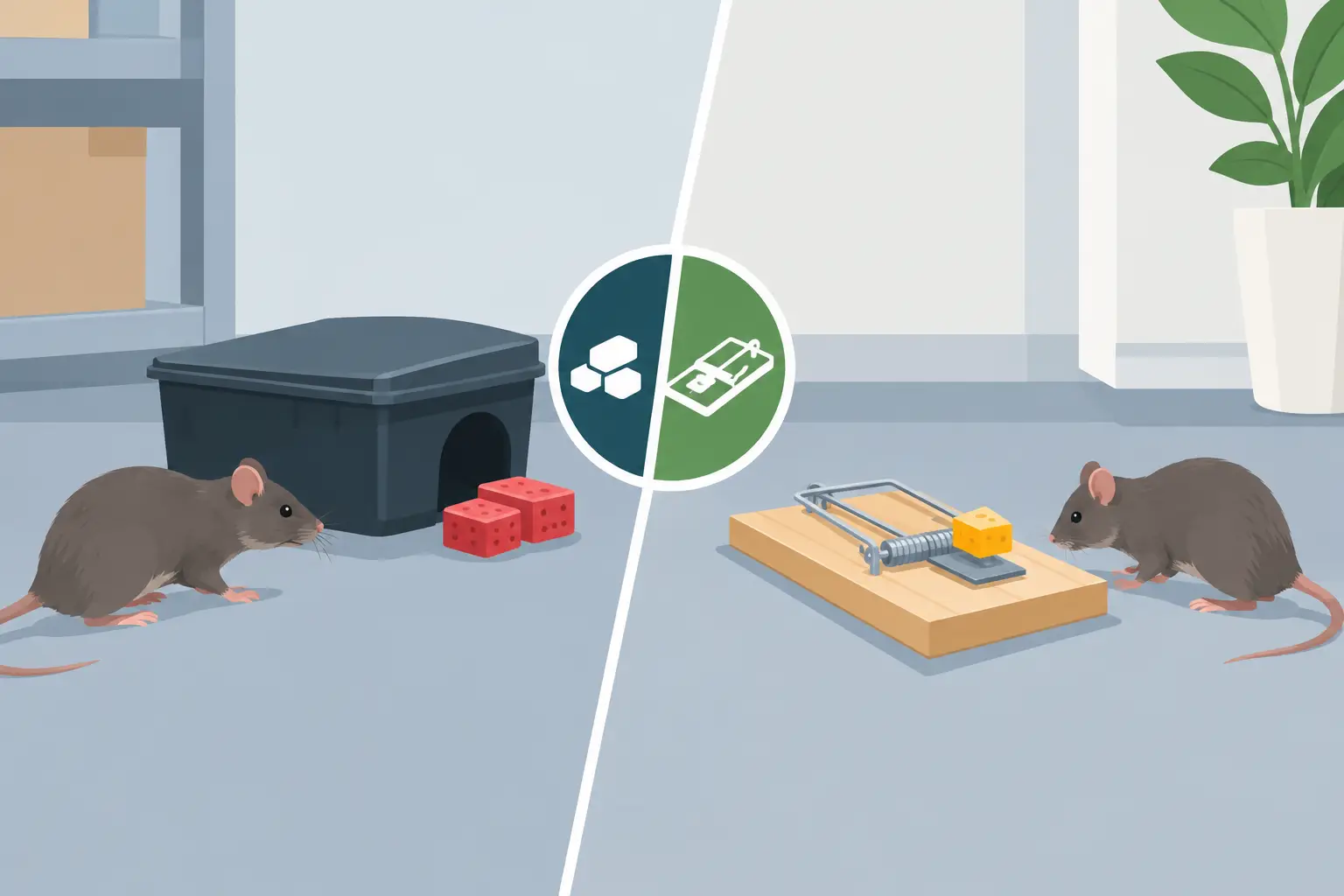
Trapping captures or kills rodents at a specific location. It gives technicians and property owners a direct result: the trap has been triggered, or it has not. Traps are often a strong choice for indoor activity, small infestations, and areas where rodent removal needs to be closely monitored.
Baiting uses a regulated rodenticide placed in a secure, tamper-resistant bait station. Rodents feed on the bait and typically die away from the station after a period of time. Baiting can cover a wider perimeter and is often useful for controlling rodent pressure around the exterior of a building.
The important difference is not simply which method kills rodents faster. It is how each method manages risk, supports inspection, and fits the property. A bait station outside a commercial building may reduce the number of rodents attempting to enter. A trap inside a pantry, utility room, or break room can address active indoor travel without introducing bait into that area.
When Trapping Is the Better Choice
Trapping is especially useful when there is clear, localized rodent activity. Fresh droppings, gnaw marks, grease rubs along a wall, or scratching sounds in a particular area help identify where traps should go. Rodents tend to travel close to walls and through protected spaces, so placement matters more than setting a large number of traps at random.
For many homes, traps are preferred indoors because they allow for quick inspection and removal. This is useful if a dead rodent hidden inside a wall, ceiling, or inaccessible void could create an odor problem. Trapping also helps confirm whether activity is ongoing after an initial treatment.
Commercial kitchens, food storage areas, and customer-facing businesses may also benefit from targeted trapping. These spaces need a clean, controlled approach that supports routine checks and minimizes disruption. A trained technician can place equipment in discreet locations while keeping it out of reach of customers, employees, children, and pets.
Trapping has limits. A single trap will not solve a widespread infestation, and rodents may avoid poorly placed or heavily disturbed traps. Some species are cautious around unfamiliar objects, particularly if food is readily available elsewhere. Follow-up service is essential because traps must be checked, reset, and adjusted as rodent travel patterns change.
Types of traps and why placement matters
Snap traps are commonly used because they are effective and provide a clear result. Enclosed trap stations add protection in locations where people or animals may be present. Multi-catch traps can help monitor and manage mouse activity in suitable indoor settings.
Glue boards may be used for monitoring in certain controlled environments, but they are not usually a complete rodent-control solution. Their effectiveness and suitability depend on the setting, and they require frequent inspection. The priority should always be a method that is effective, humane in application, and safely managed.
When Rodent Baiting Makes More Sense
Baiting is often appropriate when rodents are active around the building exterior, in protected outdoor areas, or in inaccessible locations where trapping alone cannot provide adequate coverage. A properly managed exterior baiting program can reduce rodent pressure before mice or rats reach doors, wall openings, loading areas, crawl spaces, and garbage storage areas.
This approach can be particularly valuable for apartment properties, restaurants, warehouses, factories, and facilities near open fields, construction activity, standing water, dumpsters, or heavy vegetation. These conditions can create steady rodent pressure even when the building itself is kept clean.
Professional baiting is not the same as placing loose poison in a garage or storage room. Bait should be secured inside durable, tamper-resistant stations that are placed strategically and serviced on a schedule. Technicians inspect consumption, replace damaged stations, document findings, and look for conditions that are attracting rodents.
Baiting also comes with trade-offs. Rodents may die in hidden areas, which can result in temporary odor concerns. There is also a risk to children, pets, wildlife, and non-target animals when bait is used carelessly. That is why bait selection, station security, location, and regular service are central to responsible rodent management.
Why do-it-yourself baiting can create problems
Store-bought bait can seem like a quick fix, but it is easy to use incorrectly. Placing bait where a pet can access it, using too much product, or failing to secure it can create unnecessary risk. It can also leave the real cause of the infestation untouched.
If rodents can still enter through gaps around pipes, damaged door sweeps, unscreened vents, or cracks in the foundation, new rodents may continue to arrive. A professional service plan addresses baiting as one control tool, not the entire solution.
The Best Plan Often Uses Both Methods
For many properties, baiting versus trapping is not an either-or decision. An integrated plan may use secured bait stations outdoors to reduce incoming rodent pressure and traps indoors to monitor and control activity within the building. This combination provides better visibility and helps limit the use of rodenticide in occupied spaces.
The plan should be based on an inspection, not assumptions. A technician will look for droppings, nesting material, tracks, entry points, moisture issues, food access, clutter, landscaping conditions, and garbage handling practices. In commercial settings, the inspection should also consider operations, employee traffic, customer areas, storage procedures, and sanitation schedules.
Property conditions can make a major difference. A restaurant with overflowing dumpster areas needs a different response than a homeowner storing bird seed in an open shed. A warehouse with frequent loading-door activity may need door-seal repairs and a monitored exterior program. A rental property may need tenant communication about food storage, waste disposal, and reporting signs of activity quickly.
Prevention Is What Makes Rodent Control Last
Removing rodents is urgent, but prevention protects the result. Rodents need food, water, shelter, and a way inside. Reduce those opportunities and the control program becomes far more effective.
Start by sealing openings around utility lines, foundations, doors, windows, vents, and roof edges. Keep food in hard-sided, sealed containers and clean crumbs, spills, and grease buildup promptly. Repair plumbing leaks, reduce clutter along walls, and keep outdoor vegetation from pressing against the building.
Garbage management deserves special attention. Keep dumpster lids closed, clean waste containers regularly, and avoid allowing debris to build up around collection areas. For businesses, a sanitary garbage area supports pest control, protects the customer experience, and helps maintain a safer work environment.
Regular follow-up matters because rodents are persistent. Seasonal weather, nearby construction, harvest activity, and changes in waste handling can all increase pressure around a property. Scheduled inspections catch early signs before a small issue becomes a damaging infestation.
Choose Control Based on Risk, Not Convenience
The fastest-looking option is not always the safest or most effective one. Trapping provides direct monitoring and is often ideal for indoor, targeted activity. Professional baiting can provide wider exterior coverage and help reduce steady rodent pressure around larger properties. The best method depends on the conditions found during inspection.
North Peace Pest Control and Maintenance Corporation can assess the activity, explain the recommended approach in plain language, and build a plan that protects your home, business, employees, customers, and pets. A prompt inspection gives you clear next steps and the chance to correct the conditions rodents are already using to their advantage.