
Can Termites Damage Concrete Homes? Yes, Indirectly
Can termites damage concrete homes? Learn how termites enter through cracks, threaten wood components, and what protects your property from hidden damage.
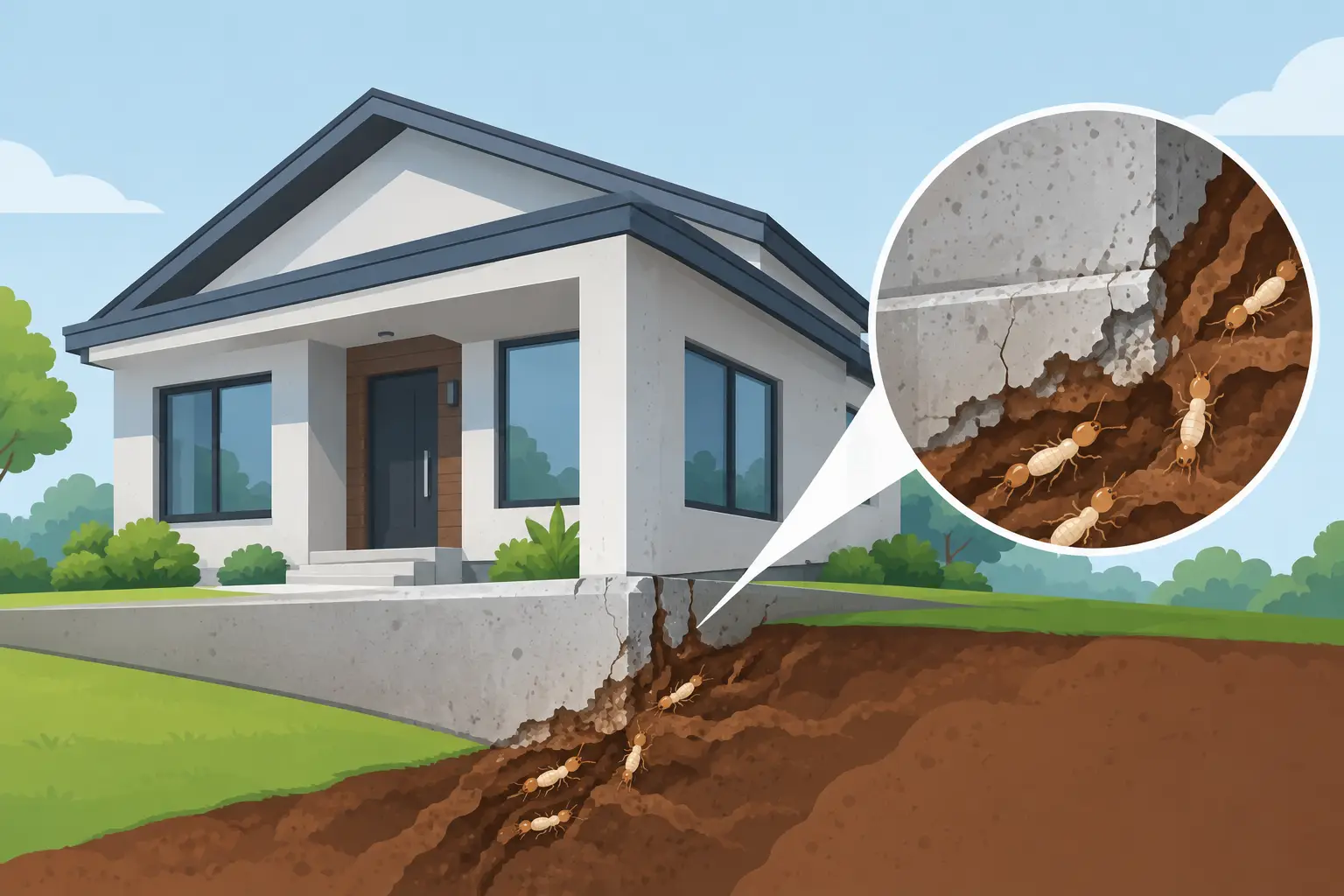
Concrete walls and slab foundations can feel like a built-in defense against termites. That confidence can be costly if it leads owners to skip inspections. Can termites damage concrete homes? Termites do not eat concrete, but they can use openings in concrete to reach the wood, insulation, flooring, framing, and stored materials that make up much of a home.
A concrete home may reduce the amount of exposed wood at ground level, but it is not automatically termite-proof. The risk depends on the construction method, local termite activity, moisture conditions, and how well gaps around the structure are maintained.
Can Termites Damage Concrete Homes Directly?
Termites cannot digest concrete, brick, steel, or solid masonry. They feed on cellulose, the material found in wood, paper, cardboard, and many plant-based building products. A termite colony will not hollow out a concrete wall the way it can damage a wood joist.
The concern is what concrete homes contain and what termites can travel through. Even homes built with concrete block, poured concrete, insulated concrete forms, or slab-on-grade foundations commonly have wood roof framing, window frames, interior trim, cabinets, subfloors, drywall paper, and wood-based structural components. Termites can also damage furniture, boxes, books, and other cellulose materials stored near walls or in basements.
Concrete can hide the route termites use. Small cracks, expansion joints, construction gaps, plumbing penetrations, and spaces around electrical lines may be enough for subterranean termites to enter. Once inside, they can travel behind finished walls or beneath flooring with very little visible evidence.
How Termites Get Into a Concrete House
Subterranean termites live in the soil and need moisture to survive. They usually enter from below or alongside the foundation, then build protected mud tubes to move between the ground and a food source. A concrete foundation may slow their access, but it does not eliminate entry points.
A hairline crack in a slab, an unsealed utility opening, or a gap where a porch meets the home can provide a pathway. Termites may also travel over concrete in mud tubes, especially where soil, mulch, stacked materials, or landscaping creates a hidden bridge to siding or framing.
Concrete block construction has its own considerations. Hollow block cells, mortar gaps, and areas where the wall meets the slab can create concealed travel routes. Insulated concrete form homes can also be vulnerable if termites gain access to foam insulation and move undetected toward wood components. The foam is not a food source, but it can provide a protected tunnel-like path.
Moisture makes these conditions more favorable. Leaking pipes, poor drainage, clogged gutters, or soil graded toward the foundation can keep the area around a home damp. That does not cause termites, but it can make a property more attractive and allow termite activity to continue unnoticed.
The Damage Can Be Hidden for Years
Termite damage in a concrete home is often not obvious because the insects are working behind finished surfaces. Homeowners may assume that a concrete exterior rules out a structural issue until a door frame softens, flooring begins to sag, or trim sounds hollow when tapped.
In residential properties, termites may damage sill plates, wall studs, roof framing, wood flooring, cabinets, and paper-faced drywall. In rental, office, restaurant, and industrial properties, the same activity can affect built-in fixtures, storage areas, partition walls, packaging materials, and wooden pallets. Repair costs can rise quickly when a colony has been active long enough to spread beyond one accessible area.
Watch for these signs, particularly near foundations, garages, crawl spaces, utility rooms, and areas with a history of moisture:
- Pencil-sized mud tubes on foundation walls, interior walls, or pipes
- Bubbling paint, blistered trim, or unexplained discoloration near lower walls
- Wood that sounds hollow, feels soft, or breaks easily when pressed
- Tight-fitting doors or windows caused by damaged or moisture-affected frames
- Swarming winged insects or discarded wings near windows, doors, or light fixtures
None of these signs confirms the extent of damage on its own. A professional inspection is the practical next step because termite activity can look similar to water damage, carpenter ant damage, or ordinary wood decay.
Concrete Construction Has Trade-Offs
Concrete homes can offer real advantages. They may have fewer exposed wood elements at the foundation line, and certain construction methods can limit the direct paths termites use to reach structural lumber. That is helpful, but it is only one part of termite prevention.
The trade-off is that concrete construction can make termite movement harder to spot. A colony may travel through concealed voids, behind insulation, or under finished flooring before visible damage appears. A slab foundation also limits access to the underside of the building, so an inspection often relies on exterior conditions, visible interior evidence, moisture sources, and targeted evaluation of higher-risk areas.
This is why a homeowner should not rely on the building material alone. A concrete home still needs routine exterior maintenance, moisture control, and periodic pest inspections when termite pressure is present in the area.
What a Termite Inspection Should Check
A thorough termite inspection is more than a quick look at the foundation. A trained technician checks accessible interior and exterior areas for evidence of live activity, previous damage, moisture conditions, and construction details that could allow termites to enter.
The inspection should include foundation walls, slab edges, crawl spaces where present, garages, utility penetrations, window and door frames, accessible roof framing, and areas where wood contacts soil. Technicians also look for drainage problems, dense vegetation against the structure, wood debris, and storage materials that create termite-friendly conditions.
If evidence is found, the treatment approach depends on the structure, the colony’s activity, and where termites are entering. A responsible plan explains what was found, which areas need attention, how the treatment works, and what follow-up monitoring or prevention is recommended. For occupied homes and businesses, safety around families, pets, employees, and daily operations should be part of that conversation.
Prevention Starts Outside the Walls
The best prevention work often happens around the perimeter of a concrete home. Keep water moving away from the foundation by maintaining gutters, extending downspouts, and correcting areas where water pools near the slab. Repair leaking outdoor faucets, plumbing lines, and damaged seals around utility openings.
Avoid piling mulch, firewood, lumber, cardboard, or yard debris against exterior walls. These materials can hold moisture and hide termite activity. Keep soil and landscaping from covering weep holes, siding edges, or visible foundation sections whenever the home’s construction requires those areas to remain clear.
Inside, address plumbing leaks promptly and avoid storing cardboard boxes directly on basement or garage floors. Regularly check lower walls, closets, utility areas, and spaces behind stored items for signs of moisture or insect activity. These small habits make it easier to spot a developing problem before repairs become more involved.
When to Call for Help
Call for a professional inspection if you see mud tubes, swarming insects, damaged wood, unexplained moisture, or a gap that could allow pests into the structure. It is also wise to arrange an inspection before buying a property, beginning a major renovation, or taking over management of a commercial building with an unknown maintenance history.
North Peace Pest Control and Maintenance Corporation helps property owners identify pest risks clearly, treat active issues responsibly, and reduce the conditions that allow them to return. Fast action protects more than the building materials - it protects the comfort, safety, and day-to-day readiness of the people who use the property.
Concrete is a strong building material, but it is not a termite treatment. Keeping entry points sealed, moisture under control, and inspections on schedule gives termites far fewer opportunities to turn a small hidden pathway into expensive damage.