
Professional Cleaning Versus In House Cleaning
Professional cleaning versus in house cleaning: compare cost, consistency, safety, and results for a smarter property care decision today for each site.
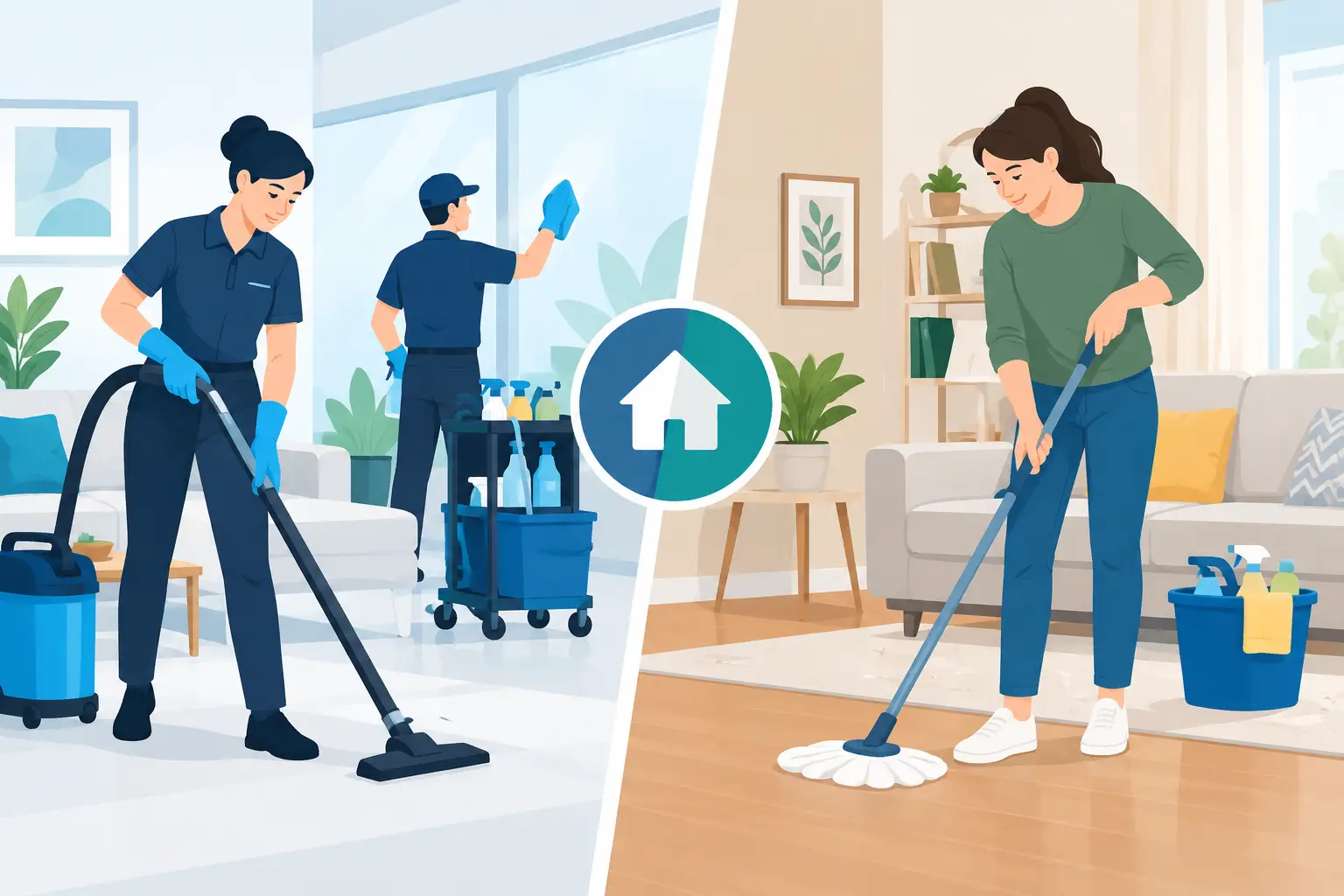
A restaurant manager notices a persistent odor near the dumpster. An office manager sees carpet stains returning faster than expected. A homeowner finds droppings in the garage after keeping up with regular cleaning. These are the moments when professional cleaning versus in house cleaning becomes more than a budget question. The right choice affects health, customer confidence, pest pressure, staff time, and how well a property is protected over time.
In-house cleaning can be a practical part of daily property care. Professional service brings specialized equipment, trained technicians, and a deeper level of sanitation when the job requires it. For many homes and businesses, the best answer is not choosing one over the other. It is assigning each approach to the work it does best.
Professional Cleaning Versus In House Cleaning: The Real Difference
In-house cleaning means your employees, residents, maintenance staff, or an internal janitorial team handle cleaning tasks. This approach works well for visible, routine needs: wiping counters, emptying indoor trash, restocking washrooms, sweeping entryways, and responding quickly to small spills.
Professional cleaning is designed for work that requires more time, equipment, training, or a documented process. It may include deep carpet extraction, tile and grout cleaning, garbage bin sanitation, odor control, post-infestation cleanup, and scheduled janitorial support. A trained service provider can assess the condition of the space, select the right products and methods, and work toward a measurable result rather than simply making an area look clean.
The difference is depth and accountability. Surface cleaning can improve appearance for the day. Deep cleaning removes built-up soil, food residue, grease, organic material, and odor sources that can affect indoor conditions and attract pests.
When In-House Cleaning Makes Sense
An internal team has one major advantage: immediate access. In a busy café, restaurant, office, warehouse, or apartment building, staff can respond to spills and messes before they become a larger issue. Daily attention also helps maintain a cleaner environment between scheduled service visits.
In-house cleaning is often a good fit when tasks are simple, frequent, and easy to monitor. For example, employees can keep break rooms orderly, remove food waste at the end of a shift, clean up spills promptly, and make sure exterior doors close properly. These habits matter because sanitation is one of the first lines of defense against rodents, ants, cockroaches, flies, and other unwanted pests.
The challenge comes when internal staff are expected to handle specialized jobs without adequate time or tools. Asking a receptionist to scrub heavily soiled tile, a kitchen employee to sanitize outdoor bins, or a maintenance worker to remove deep carpet contamination can lead to inconsistent results. It can also take people away from their primary responsibilities.
For homeowners, the same principle applies. Regular vacuuming, kitchen cleanup, and proper waste storage are essential. But deeply embedded carpet soil, recurring odors, or contamination following a pest issue may need a more thorough approach than household equipment can provide.
Where Professional Service Delivers More Value
Professional cleaning is not automatically necessary for every task. It becomes valuable when the consequences of poor cleaning are higher than the apparent cost of the service.
A restaurant with greasy floor buildup risks slip hazards, unpleasant odors, and sanitation concerns. A rental unit with stained carpets and dirty bins may be harder to turn over quickly. An office with neglected washrooms can affect employee comfort and visitor impressions. In an industrial facility, accumulated debris around storage areas can create housekeeping concerns and provide cover or food sources for pests.
Professional crews bring commercial-grade equipment that can remove more soil and moisture than basic tools. They also understand how different surfaces respond to treatment. Using the wrong chemical on tile, carpet, upholstery, or flooring can leave residue, damage finishes, or fail to solve the underlying problem.
There is also a safety benefit. A professional provider should explain what will be cleaned, which areas need preparation, and how the work will be completed with consideration for families, pets, employees, and normal operations. That clarity matters when cleaning overlaps with pest prevention or when a property needs to remain open and presentable.
Deep Cleaning Can Support Pest Prevention
Cleaning does not replace pest control, and pest treatment does not replace sanitation. The two work best together.
Food particles behind appliances, overflowing garbage bins, damp areas near drains, cluttered storage rooms, and heavily soiled carpets can all make a property more attractive to pests or make an existing problem harder to control. Professional cleaning helps reduce these conditions, especially in areas that receive limited attention during normal daily routines.
For example, a garbage bin may look acceptable after it is emptied but still hold residue and odors on the interior walls, lid, and surrounding pad. Regular sanitation helps remove the material that can draw insects and rodents back to the area. Likewise, cleaning after rodent activity or insect activity should address contamination safely rather than simply covering it with fragrance.
North Peace Pest Control and Maintenance Corporation approaches property hygiene as part of a larger plan for cleaner, safer, pest-free spaces. That connected approach is especially useful for businesses that need reliable cleaning alongside ongoing pest prevention.
Compare the True Cost, Not Just the Invoice
The lowest upfront option is not always the least expensive over time. In-house cleaning can appear more affordable because labor is already on payroll, but the real cost includes wages, training, supplies, equipment maintenance, scheduling, oversight, and the lost productivity of employees doing work outside their main role.
Professional cleaning has a direct service cost, but it can reduce the need to buy and maintain specialty equipment. It can also help avoid costly outcomes such as damaged flooring, recurring odors, poor customer reviews, delayed tenant turnover, staff complaints, or sanitation problems that disrupt operations.
Consistency is another cost factor. If cleaning depends on whoever is available at the end of a long shift, tasks may be skipped when business is busy. A scheduled professional program creates a predictable standard and a clear service interval. That can be particularly helpful for property managers, restaurants, offices, and facilities with multiple spaces to oversee.
Still, outsourcing every small task is rarely efficient. A practical plan often keeps daily housekeeping in-house and schedules professionals for periodic deep cleaning, high-risk areas, specialty surfaces, bin sanitation, and situations that need immediate expert attention.
Questions to Ask Before You Decide
Start with the condition of the property, not a general preference for doing everything internally or outsourcing everything. Ask whether the work is routine or specialized, whether staff have time to do it properly, and whether the area affects food safety, tenant satisfaction, employee wellbeing, or customer perception.
Consider how often the issue returns. If odors, stains, greasy floors, or pest activity keep coming back after routine cleaning, the process may be treating the symptom rather than the source. A professional assessment can identify overlooked areas and recommend a service frequency that fits the building and its use.
Also think about timing. A one-time deep clean may be appropriate before a move-in, after a busy season, following a pest issue, or before an important inspection. Scheduled service is often a better fit for commercial kitchens, shared buildings, offices, industrial sites, and properties where cleanliness must be maintained without interruption.
Build a Cleaning Plan That Holds Up
The strongest property care plans are realistic. Staff handle the daily habits that prevent messes from accumulating. Professional technicians handle the jobs that require deeper cleaning, specialized tools, safe product use, and a consistent standard.
That balance protects more than appearances. It helps keep odors under control, reduces pest-friendly conditions, supports a healthier environment, and lets employees focus on the work they were hired to do. When a space needs more than a quick cleanup, acting early can keep a manageable issue from becoming a costly disruption.