
Carpet Extraction Versus Dry Cleaning Compared
Compare carpet extraction versus dry cleaning for homes and workplaces. See which method fits stains, drying time, traffic, and routine care needs today.
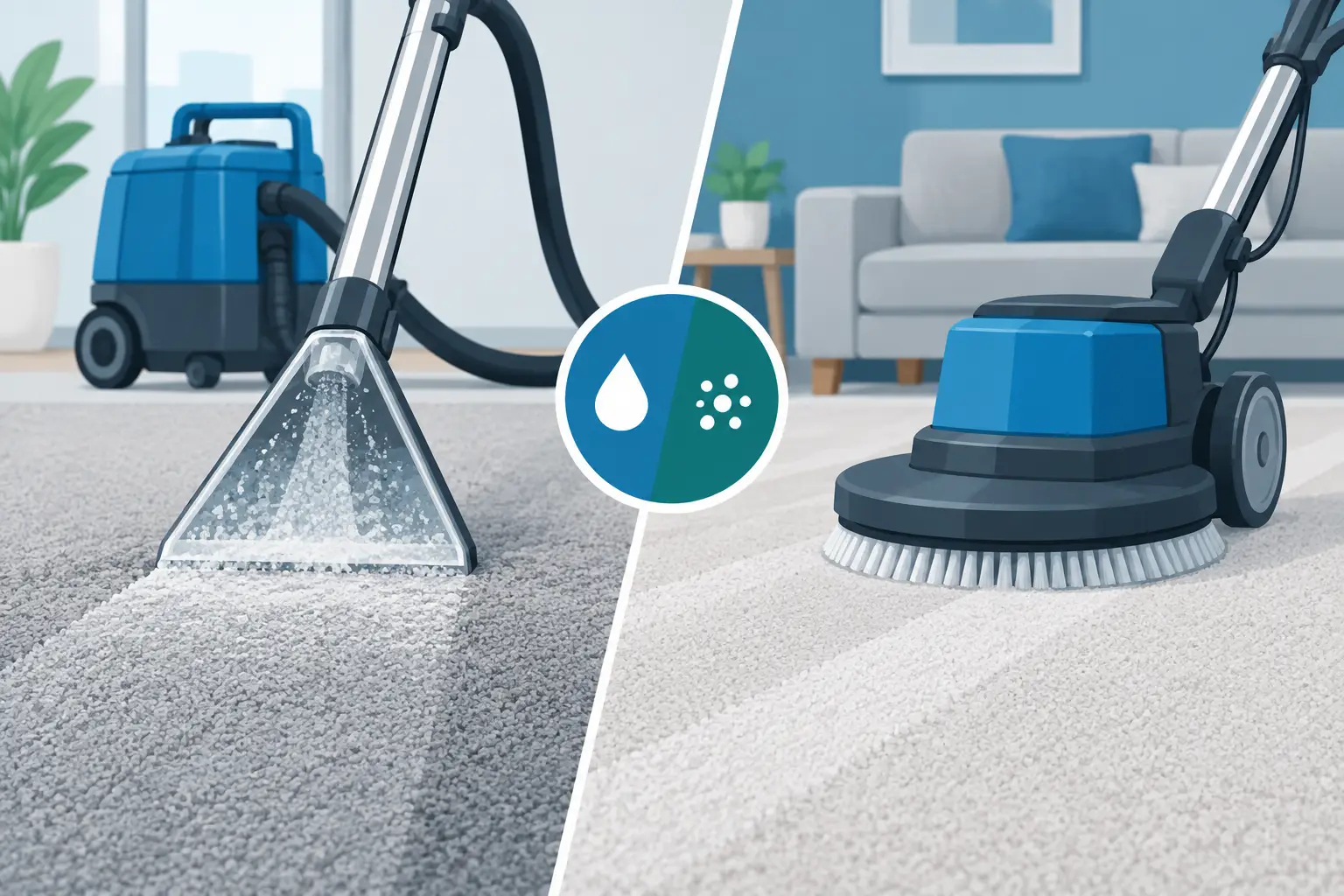
A carpet can look clean from the doorway and still hold tracked-in soil, food residue, pet accidents, and odors below the surface. When choosing carpet extraction versus dry cleaning, the right method depends on what is in the carpet, how quickly the area must reopen, and the carpet manufacturer’s care guidance. Both methods have a place. The best result comes from matching the cleaning process to the property’s actual condition.
What Carpet Extraction Does
Carpet extraction, often called hot water extraction, uses cleaning solution, agitation, and controlled water flow to loosen embedded soil. A professional machine then extracts the dirty water, residue, and moisture from the carpet fibers.
This method is especially useful when carpets have visible staining, heavy foot traffic, lingering odors, or a buildup that routine vacuuming cannot remove. In homes, that may mean muddy entryways, pet areas, and living rooms. In commercial spaces, it often means hallways, office workstations, restaurant seating, rental turnovers, and customer-facing areas.
Extraction is not simply “soaking” a carpet. Done properly, technicians use the appropriate amount of solution and water for the carpet type, then make thorough extraction passes to remove as much moisture as possible. Good airflow and ventilation help the carpet dry efficiently afterward.
When extraction is the stronger choice
Extraction is often the better option when soil has worked down into the pile rather than sitting on top of it. It can provide a more complete reset for carpets that have not been professionally cleaned in a long time.
It is also a practical response to odor sources. Pet accidents, spilled drinks, food residue, and damp soil can leave contaminants beneath the surface. Surface-level cleaning may improve appearance temporarily, but extraction is more likely to remove the material causing the problem.
For landlords and property managers, extraction can be valuable between tenants when a unit needs a more thorough hygiene-focused cleaning. For businesses, periodic extraction helps protect the appearance and useful life of carpeting in high-use areas.
What Dry Carpet Cleaning Does
Dry carpet cleaning is a low-moisture process. Depending on the system, a technician may apply an absorbent compound or an encapsulating cleaning product that surrounds soil particles. Agitation lifts the soil from the fibers, and the material is vacuumed away once it has done its work.
The name can be misleading. Many dry-cleaning methods use a small amount of moisture, but far less than extraction. The main advantage is faster drying time, which can be important for busy offices, retail floors, common areas, and facilities that cannot leave carpeted rooms out of service for long.
Dry cleaning is often a good maintenance option for lightly to moderately soiled carpet. It freshens the appearance of fibers, removes surface soil, and helps keep traffic lanes from becoming permanently dull between deeper cleanings.
Where dry cleaning has limits
Low-moisture cleaning is not always the answer for deep stains, strong odors, or heavy contamination. If spilled material has penetrated the backing or padding, a dry method may not reach the source sufficiently.
That does not mean dry cleaning is ineffective. It means expectations should match the condition of the carpet. A conference room with routine shoe traffic may benefit greatly from dry cleaning. A rental unit with pet odor, old drink spills, and dark traffic lanes may require extraction for a meaningful result.
Carpet Extraction Versus Dry Cleaning: Key Differences
The clearest difference is cleaning depth. Extraction generally reaches deeper into carpet fibers and can remove more embedded material. Dry cleaning focuses on quick, low-moisture maintenance and can be easier to schedule around active operations.
Drying time is the next major consideration. Dry-cleaned carpet may be ready for normal use very quickly, sometimes within an hour or two depending on the method, airflow, and humidity. Extracted carpet needs more time. Most professionally extracted carpets dry within several hours, though thick carpet, poor ventilation, cool conditions, and heavy cleaning needs can extend that window.
There is also a difference in the type of problem being addressed. Extraction is commonly selected for restorative cleaning, while dry cleaning is commonly selected for appearance management and routine maintenance. Many well-managed properties use both at different times rather than treating them as competing services.
A practical schedule might include low-moisture cleaning in high-traffic commercial areas when downtime is limited, followed by periodic extraction to remove deeper buildup. At home, dry cleaning may suit a lightly soiled room before guests arrive, while extraction may be more appropriate after a wet winter, a move-out, or repeated pet accidents.
How to Choose for Your Property
Start with the condition of the carpet, not just its age. Look closely at traffic lanes, corners, furniture edges, and areas near doors. If the carpet feels matted, looks gray even after vacuuming, or has an odor that returns after surface cleaning, it likely needs deeper attention.
Next, consider how the space is used. A busy café, office, or apartment hallway may need to remain open, making quick dry times a priority. A home or vacant unit may have more flexibility, allowing extraction to do the heavier work.
Carpet construction matters too. Some delicate fibers, specialty rugs, and manufacturer warranties require specific cleaning methods. A trained technician should inspect the material, test problem areas when needed, and explain what can realistically be improved before cleaning begins.
For commercial and industrial sites, timing is part of the cleaning decision. Evening, weekend, or low-traffic service can allow for extraction without disrupting employees or customers. Where operations run continuously, a low-moisture process may be the more workable choice for certain areas.
Stains, Odors, and High-Traffic Areas
Not every stain responds the same way. Water-based spills, oily residues, proteins, dyes, and old spots may each require different treatment. The sooner a spill is addressed, the better the chance of complete removal. Rubbing a fresh stain often pushes it deeper into the fibers, so blotting with a clean cloth is usually the safer first step.
Odors deserve a separate assessment. Perfumed products can cover an odor for a short time, but they do not remove the source. Where odor-causing residue is present beneath the surface, extraction combined with the proper odor treatment may be necessary.
High-traffic areas also need more than occasional emergency cleaning. Entry mats, frequent vacuuming, spot response, and scheduled professional cleaning all reduce the grit that wears down carpet fibers. This matters in customer-facing businesses, but it also matters in homes where children, pets, and seasonal weather create a steady stream of soil.
Why Professional Process Matters
The equipment alone does not determine the outcome. Too much water, weak extraction, incorrect products, or rushed drying can leave carpet overly damp or leave cleaning residue behind. Residue attracts soil, which can make carpet look dirty again sooner than expected.
A professional process includes inspecting the carpet, identifying stains and risk areas, selecting the appropriate method, and allowing enough time for proper soil removal and drying. It should also include straightforward guidance about what the cleaning can accomplish. Some permanent stains, wear patterns, and fiber damage cannot be cleaned away, but an honest assessment helps property owners make informed decisions.
North Peace Pest Control and Maintenance Corporation approaches carpet cleaning as part of overall property hygiene. Clean flooring supports a healthier-looking, more comfortable space for families, tenants, employees, and customers.
The Better Choice Is Often a Planned Combination
Choosing between extraction and dry cleaning does not have to be an either-or decision. Dry cleaning can keep a busy carpet presentable between services, while periodic extraction removes the deeper soil that shortens carpet life and contributes to odor.
If you are unsure, focus on the outcome you need: fast reopening, deep soil removal, odor control, or a scheduled maintenance plan. A clear inspection and the right cleaning method can turn a tired carpet into a cleaner, more welcoming part of the property - without guessing or overcleaning it.