
Kitchen Sanitation Essentials That Prevent Pests
Kitchen sanitation essentials protect food, prevent pests, and keep homes and workplaces cleaner with practical daily and scheduled routines in busy properties.
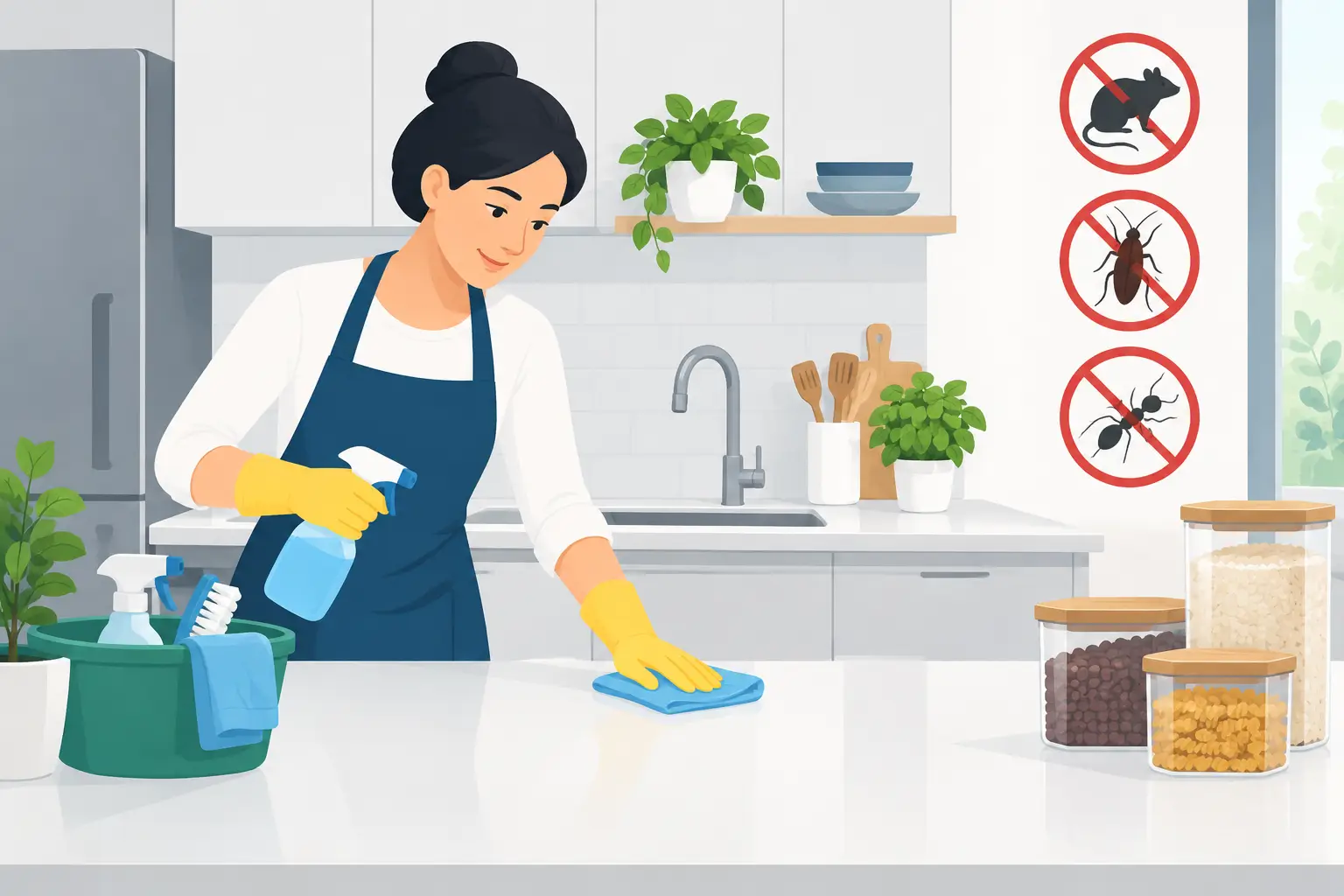
A few crumbs beneath a toaster, grease collecting behind a range, and one overflowing trash bin can change a clean-looking kitchen into a food source for pests. Kitchen sanitation essentials are not about making every surface look perfect. They are the practical routines that protect food, reduce odors, limit pest activity, and keep a home or business ready for the people who rely on it.
For homeowners, that means a safer place to prepare meals for family and pets. For restaurants, cafes, offices, rental properties, and industrial break rooms, it also supports employee confidence, customer experience, and day-to-day operations. The goal is simple: remove food, moisture, and hiding places before they become a larger sanitation problem.
Start With Food, Moisture, and Waste
Most kitchen sanitation issues come back to three conditions: accessible food, standing water, and poorly managed garbage. Pests do not need an obvious spill or an open bag of food. Grease residue on a cabinet handle, a forgotten onion in a pantry corner, or liquid in the bottom of a trash can may be enough to sustain activity.
Food should be placed in sealed containers after opening, including dry goods such as flour, cereal, pet food, and snacks. In commercial settings, containers should be labeled and stored off the floor where possible. Refrigerators need attention as well. Check for expired items, leaking packages, and spills under produce drawers. A refrigerator that looks tidy on the shelves can still develop odors and bacteria in areas no one sees during a busy shift.
Moisture deserves the same level of attention. Repair dripping faucets, clear slow drains, and dry counters before closing the kitchen for the night. Do not leave wet dishcloths bunched in a sink or on a counter. They hold moisture and food residue, which creates both an odor issue and a sanitation concern.
Waste is where good routines often fail. Empty indoor trash before it is packed down, especially when it contains food scraps. Use liners, close lids, and wash bins when residue builds up. Outside garbage bins and dumpsters should be kept closed, positioned away from entry points when practical, and cleaned on a regular schedule. If odors remain after routine cleaning, a deeper sanitation service may be needed to remove buildup from the bin itself.
Clean First, Then Sanitize
Cleaning and sanitizing are related, but they are not the same task. Cleaning removes visible debris, grease, and soil. Sanitizing reduces germs on a properly cleaned surface. Applying sanitizer over crumbs or grease does not produce the result most people expect.
For food-prep counters, cutting boards, sink areas, appliance handles, and dining surfaces, begin by removing residue with the appropriate cleaner. Follow with a food-safe sanitizer used according to its label directions. The contact time matters. Wiping a product away immediately may not allow it to work as intended.
Avoid mixing cleaning products. Combining chemicals can create harmful fumes or reduce effectiveness. Keep products in their original labeled containers and store them away from food, dishes, and areas accessible to children or pets. In commercial kitchens, staff should know which products are intended for degreasing, routine cleaning, food-contact sanitation, and restroom cleaning. One bottle should not be used for every job.
Dishcloths and sponges need a clear replacement routine. A sponge that smells stale is already telling you it needs attention. Launder reusable cloths frequently, allow them to dry fully, and replace worn sponges rather than trying to extend their use indefinitely. The right schedule depends on how heavily the kitchen is used, but high-volume food preparation calls for more frequent replacement and cleaning.
Kitchen Sanitation Essentials for Daily Closing
A daily closing routine is the strongest defense against recurring odors and pest pressure. It does not need to be complicated, but it must reach the areas that collect food and moisture after normal activity ends.
At the end of the day, wipe and sanitize food-contact surfaces, clean spills inside the microwave and refrigerator, sweep the floor, and address food debris around appliances. Mop when needed, paying close attention to corners, under shelving, and along baseboards. Move portable equipment occasionally rather than cleaning only the visible floor around it.
Check sinks and drains before leaving. Remove food particles from strainers, rinse the basin, and dry it when possible. A drain with recurring odor, slow flow, or visible buildup should not be ignored. Routine cleaning may help, but persistent issues can point to a plumbing problem or deeper organic buildup that needs professional attention.
For a commercial kitchen, assign responsibilities rather than assuming the last person out will handle everything. One employee may manage food storage, another may clean the dish area, and a supervisor can complete a final walk-through. A simple checklist is useful because consistency matters more than memory during a busy closing shift.
Do Not Overlook the Hidden Areas
The most visible kitchen surfaces receive regular attention. The areas behind, beneath, and inside equipment are where sanitation gaps develop. Grease can accumulate behind ranges and under fryers. Crumbs gather beneath refrigerators and shelving. Condensation pans, cabinet hinges, wall-floor joints, and the space around plumbing lines can provide moisture and cover.
Set a scheduled time to pull out movable appliances, vacuum debris, and clean the floor and wall behind them. In a home, monthly may be sufficient depending on use. In a restaurant, cafe, or employee kitchen with frequent food handling, these areas may need attention every week or more often.
Also inspect dry-storage spaces. Rotate stock so older items are used first, wipe shelves, and look for torn packages, droppings, unusual odors, or gnaw marks. These signs should be taken seriously even if no pest is seen. Early action is usually faster and less disruptive than waiting for a noticeable infestation.
Keep Pests From Finding a Way In
Sanitation reduces what attracts pests, but exclusion limits their access. Both are needed for lasting control. Inspect door sweeps, weather stripping, window screens, and gaps around pipes or utility lines. A small opening near a sink cabinet or exterior door can become a reliable entry point.
Keep cardboard to a minimum in food storage areas, particularly in commercial settings. Boxes can hold crumbs, absorb moisture, and create sheltered harborage. Break down deliveries promptly and move them to the appropriate disposal area. Store incoming supplies away from walls when possible so staff can inspect the surrounding area during cleaning.
If you see ants, cockroaches, rodents, or repeated insect activity, avoid relying on surface sprays as the whole solution. Sprays may kill visible pests while leaving the food source, entry point, or nesting area unchanged. A professional inspection can identify conditions that are supporting the problem and recommend treatment that fits the property, occupants, and operations.
Set a Schedule That Matches Your Kitchen
There is no single cleaning frequency that works for every property. A family kitchen used for dinner each night has different demands than a cafe preparing food from early morning through close. The right plan reflects volume, food type, trash capacity, moisture issues, and the level of pest pressure around the building.
Daily work should cover food residue, dishes, trash, sinks, and high-touch surfaces. Weekly work can include detailed floor edges, refrigerator checks, cabinet fronts, and appliance exteriors. Monthly tasks may include pulling equipment, cleaning storage shelves, washing trash containers, and checking seals around doors and plumbing.
For managers, write the schedule down and make it easy to verify. A missed task is easier to correct when it is visible. For landlords and homeowners, a recurring calendar reminder can prevent the gradual buildup that is easy to miss when life gets busy.
When Routine Cleaning Is Not Enough
Persistent grease, drain odors, stained grout, recurring pest sightings, or garbage-bin buildup are signs that routine cleaning may no longer be enough. These conditions can affect comfort and food safety, and they often worsen when handled only at the surface level.
North Peace Pest Control and Maintenance Corporation helps property owners address sanitation concerns with practical cleaning, bin sanitation, and pest-management support. Trained technicians can assess the conditions involved, explain the recommended process clearly, and help create a plan that protects people, pets, and business operations.
A clean kitchen is built one repeatable habit at a time. Start with the next closing routine, look behind the equipment, and deal with the small source of odor or residue before it becomes the reason pests stay.