
One-Time Versus Recurring Pest Service: Which Is Right?
Compare one-time versus recurring pest service to choose fast relief, lasting prevention, and the right level of protection for your property today.
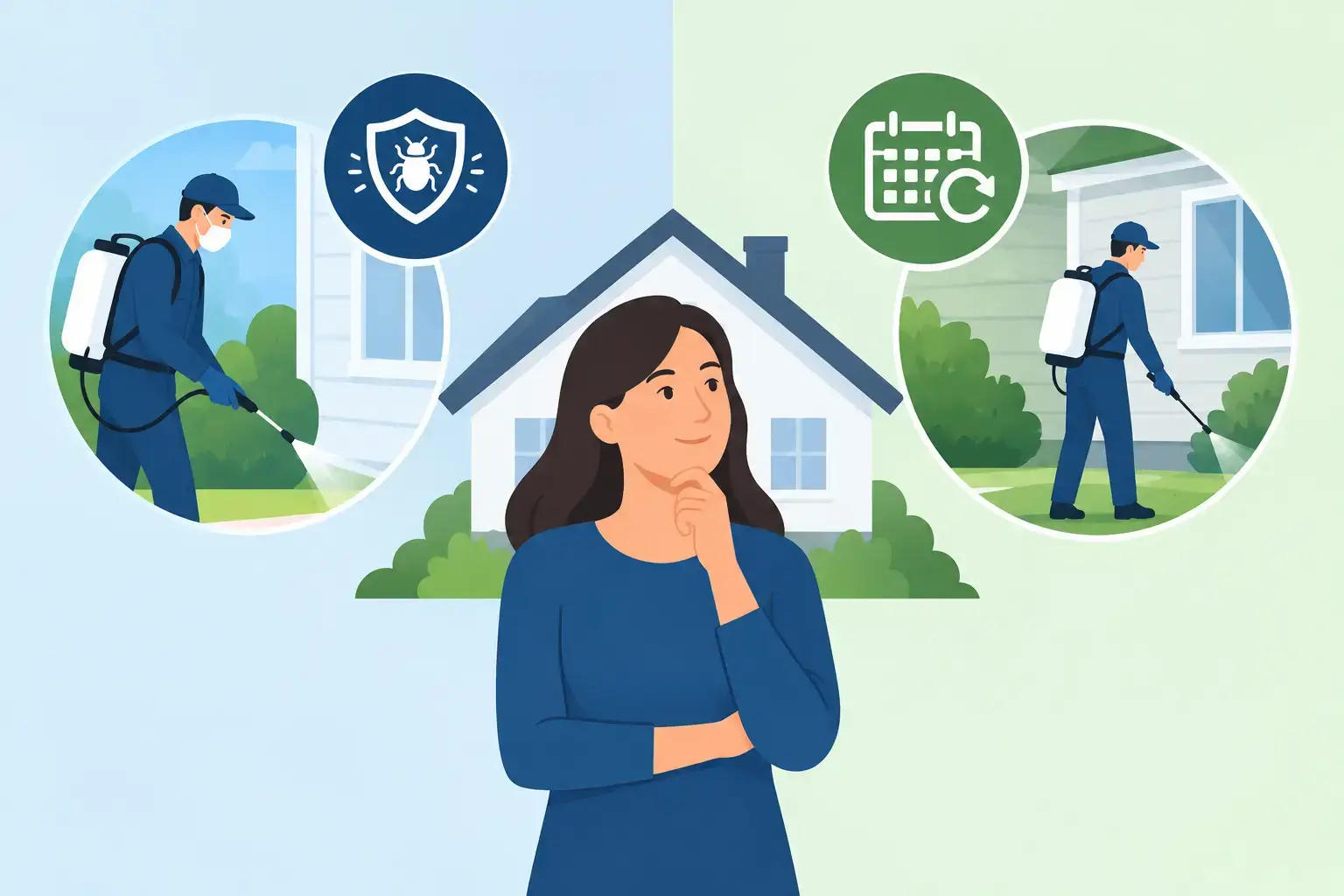
A mouse sighting in the kitchen, ants near a break room sink, or wasps gathering by an entrance can make one question urgent: do you need a single treatment or ongoing support? Choosing between one-time versus recurring pest service is not just about cost. It is about the type of pest, the conditions around the property, how quickly the problem can return, and how much responsibility you carry for the people using the space.
For some properties, one targeted visit resolves a limited issue. For others, scheduled service is the practical way to protect a home, rental unit, restaurant, office, or industrial facility before a small problem becomes a disruption. The right answer starts with a clear inspection and an honest look at the risk.
What a One-Time Pest Service Is Designed to Do
A one-time pest service focuses on an active, defined concern. A trained technician inspects the affected area, identifies likely pest activity and contributing conditions, recommends treatment, and explains what should happen next. The goal is fast relief and a clear path back to a clean, comfortable property.
This approach often makes sense when the issue is isolated. You may have noticed ants entering through one area after a weather change, a wasp nest near a deck, or rodents getting into a garage through a specific opening. If the source can be addressed and there is no sign of widespread or repeating activity, a single professional service may be enough.
A one-time visit can also be a smart starting point when you are unsure what you are dealing with. Pest activity is not always obvious. Scratching noises, droppings, unusual odors, bite marks, or damaged packaging can have different causes. An inspection helps replace assumptions with a practical treatment plan.
That said, “one-time” should not be confused with “set it and forget it.” Some treatments require a follow-up check, especially when pests have multiple life stages or when activity was established before treatment. A responsible provider should explain this before work begins, rather than promising a result that the situation cannot support.
When One-Time Service Is a Good Fit
One-time service is often appropriate when pest pressure is low, the source is clear, and the property owner can maintain the prevention steps afterward. It can be especially useful for homeowners dealing with a sudden seasonal issue or landlords preparing a vacant unit after a confirmed, limited concern.
It may also fit businesses with an unusual event rather than an ongoing exposure. For example, an office may need rapid treatment after pests enter during construction nearby, while a café may need an immediate response to activity traced to a specific delivery or storage issue. In these cases, prompt treatment paired with improved cleaning, storage, and exclusion can restore normal operations.
The trade-off is that a one-time service provides limited ongoing monitoring. If conditions remain favorable - accessible food, moisture, clutter, unsealed entry points, or sanitation gaps - pests can return. The initial treatment may have worked exactly as intended, but the property may still be vulnerable.
Why Recurring Pest Service Protects High-Risk Properties
Recurring pest service is a scheduled program built around prevention, monitoring, and early intervention. Instead of waiting until people see pests, a technician returns at planned intervals to inspect pressure points, refresh appropriate controls, identify sanitation concerns, and document conditions that could lead to activity.
For commercial and industrial properties, this consistency matters. A single rodent sighting in a restaurant, a cockroach issue in a multi-unit building, or flies around a garbage area can affect customer confidence, employee comfort, and daily operations. Scheduled service helps management address risks before they become visible to tenants, guests, inspectors, or staff.
Recurring service is also valuable for properties that naturally attract pests. Buildings near fields or wooded areas, older structures with many access points, shared housing, food-handling spaces, warehouses, garbage collection areas, and facilities with frequent deliveries all face higher exposure. The goal is not to treat constantly. It is to inspect consistently and act before pest activity gains a foothold.
For homeowners, recurring service can provide peace of mind where seasonal pests return every year or where previous infestations have shown that the home has ongoing vulnerabilities. A technician can watch for early signs, help identify access points, and recommend practical changes that reduce risk without disrupting family routines.
One-Time Versus Recurring Pest Service: Key Differences
The clearest difference between one-time versus recurring pest service is timing. One-time service responds to a known issue. Recurring service manages the conditions that allow issues to develop or return.
Cost is another difference, but it should be viewed in context. A one-time treatment typically has a lower immediate cost because it addresses a single visit or defined treatment plan. Recurring service is an ongoing investment, but it can reduce the chance of expensive disruptions, product loss, tenant complaints, emergency calls, and reputational damage. For a business, prevention may be less costly than closing off an area or responding after customers notice a problem.
The level of documentation can differ as well. Scheduled commercial programs often provide service records and clear findings that help managers track recurring conditions. This is useful for businesses that need to show active attention to cleanliness, facility hygiene, and pest prevention.
Neither option is automatically better. A one-time visit can be exactly right for an isolated problem. A recurring plan is usually the stronger choice when pest pressure is ongoing, the property has many occupants or customers, or a return of activity would create serious consequences.
How to Choose the Right Level of Protection
Start by considering the pest, the property, and the impact of another occurrence. A small issue in a detached storage area does not carry the same risk as pest activity near food preparation, patient areas, rental units, or customer entrances.
Ask whether this has happened before. Repeated sightings in the same season or location are a strong sign that the property needs more than a single treatment. Also consider how much daily control you have over the environment. A homeowner may be able to quickly change storage habits and seal a gap. A busy facility with multiple shifts, deliveries, dumpsters, and shared spaces may need regular professional oversight.
For property managers, recurring service is often easier to manage across multiple units or common areas. Rather than reacting to each complaint separately, the program creates a predictable process for inspections, treatments, recommendations, and communication. That structure protects residents while helping the property stay cleaner and more comfortable.
For food service businesses, sanitation should be part of the decision. Pest prevention works best alongside clean floors, well-managed waste, protected food storage, and attention to drains, break rooms, and exterior garbage areas. When hygiene and pest control are handled as connected responsibilities, the property is easier to protect.
What Professional Service Should Include
Whether you select a one-time visit or a recurring program, look for clear explanations and practical recommendations. Effective pest management is not just about applying a product. It begins with inspection, identification, and an understanding of why pests are using the space.
A trained technician should communicate where activity was found, what treatment is appropriate, what preparation may be needed, and what you can do between visits. Family-safe, pet-safe, and workplace-conscious methods should be considered as part of the treatment plan, along with the needs of the people who live or work on the property.
North Peace Pest Control and Maintenance Corporation helps clients make this decision without pressure. The focus is on fast response for active problems, sensible prevention where it is needed, and straightforward guidance that helps customers protect their properties with confidence.
The best service plan is the one that matches the real conditions at your property. Address an isolated issue quickly, but do not ignore patterns. When pests keep finding a way in, regular prevention gives you the chance to stop managing surprises and start maintaining a cleaner, safer space.