
Top Signs of Drain Flies in Your Home or Business
Learn the top signs of drain flies, where they breed, and how to stop recurring activity in homes, restaurants, offices, and other facilities safely indoors.
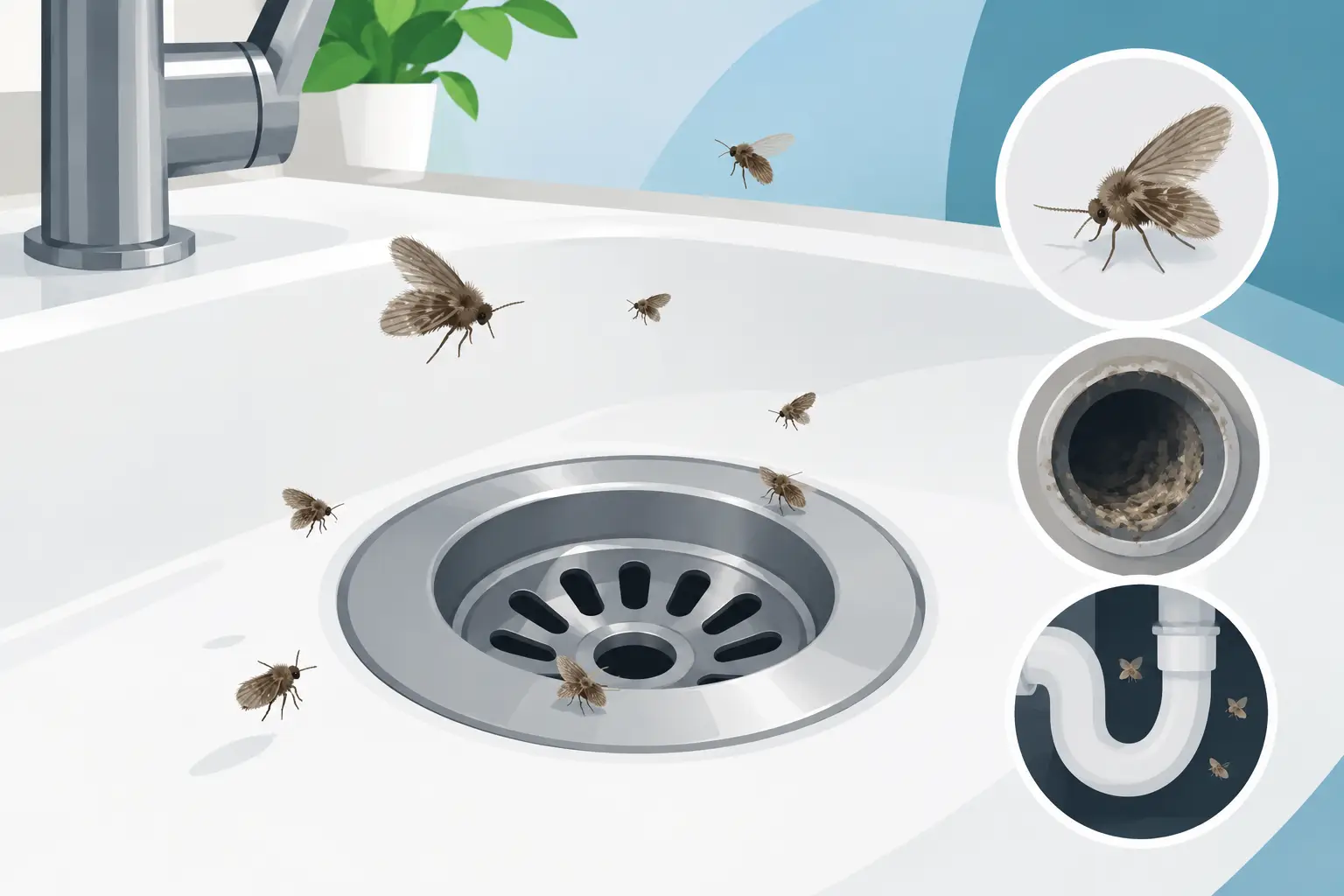
A few tiny, fuzzy-looking flies resting near a sink can be easy to dismiss. But when they return every morning, gather around a floor drain, or appear in a staff washroom, they are usually pointing to a sanitation issue that needs attention. The top signs of drain flies help you separate a minor nuisance from a breeding problem hidden inside a drain, plumbing fixture, or moisture-prone area.
Drain flies do not usually bite, sting, or damage a building. Their presence still matters. They breed in the organic film that can build up where moisture, soap residue, food particles, grease, and debris collect. In homes, that may be a bathroom or kitchen drain. In restaurants, offices, rental properties, and industrial facilities, the source can be harder to find and may affect cleanliness standards, employee comfort, customer confidence, and daily operations.
What Drain Flies Look Like
Drain flies are very small, typically about one-eighth of an inch long. They have broad, rounded wings covered in fine hairs, giving them a fuzzy or moth-like appearance. Their color is often gray, tan, or dark brown.
Unlike fruit flies, which tend to hover around ripe produce, recycling, and spilled drinks, drain flies are weak fliers. They commonly rest on walls, ceilings, mirrors, or nearby surfaces. If disturbed, they may make a short, fluttering flight and settle again quickly.
Their appearance can vary slightly, so identification is useful before treatment. Small flies around a property are not always drain flies. Fungus gnats, fruit flies, and phorid flies can look similar, but each points to a different source and requires a different prevention plan.
Top Signs of Drain Flies to Watch For
The clearest warning sign is a repeated pattern, not a single insect. One fly that comes in through an open door is different from several flies appearing in the same location day after day.
Flies gathering near drains and wet fixtures
Drain flies are most often seen around sink drains, shower drains, bathtub drains, floor drains, mop sinks, laundry drains, and utility rooms. They may also appear near condensate lines, leaking pipes, sewage ejector areas, or rarely used fixtures.
A bathroom where flies appear near the vanity but not elsewhere in the home is a useful clue. In a commercial setting, activity near a bar sink, dish area, back-room floor drain, or janitorial closet deserves a closer inspection. The location helps narrow down where the insects may be breeding.
Activity is strongest in the morning or after quiet periods
Drain flies often become more noticeable after a property has been quiet overnight. Homeowners may see them on a bathroom mirror in the morning. Restaurant or office staff may notice them near drains after a weekend closure or before opening.
This does not mean the flies only come out at one time of day. It means their resting spots are easier to see before cleaning, foot traffic, air movement, and normal activity disturb them.
Small flies keep returning after surface cleaning
Wiping the sink, spraying an air freshener, or pouring a general cleaner down a drain may make an area look better temporarily. It does not always remove the slimy organic layer inside the drain where larvae develop.
If flies disappear for a day and then return, the breeding material may still be present. Repeated activity after routine cleaning is one of the most reliable signs that the issue is inside the drain system or another hidden wet area, rather than simply on the countertop.
You notice dark, gelatinous buildup in or around a drain
Drain flies lay eggs in moist organic buildup. This material can look like a dark, slick, or gelatinous coating inside a drain, particularly around the drain wall just below the opening. Grease, hair, soap scum, food residue, and biofilm all create favorable conditions.
A foul or musty odor may occur at the same time, although not every drain fly problem smells bad. Odors are a reason to investigate further because they can indicate trapped debris, poor drainage, or plumbing conditions that need correction.
Flies appear near an unused drain
A rarely used basement, mechanical-room, shower, or floor drain can be an easy source to miss. When water in a drain trap evaporates, odors and insects may have a clearer path into the room. Debris can also sit undisturbed for long periods.
In larger facilities, drains behind equipment, under shelving, in utility areas, or inside seldom-used restrooms are common trouble spots. A thorough inspection should include areas that are out of daily view, not only the drain closest to where the flies were seen.
Why Drain Flies Keep Coming Back
Adult drain flies are the visible part of the problem, but they are not the whole problem. Removing only the adults does not stop new flies from emerging. The key is removing the material that supports eggs and larvae, then correcting the moisture or maintenance condition that allowed it to build up.
That can be straightforward when a bathroom sink has a dirty drain. It can be more involved when there is a slow leak, a damaged drain line, standing water below equipment, a neglected grease area, or a floor drain with ongoing buildup. Commercial kitchens and multi-unit properties often have several potential sources, so assumptions can waste time and delay results.
Drain flies can complete their development quickly under favorable conditions. That is why a small issue can seem to appear suddenly. It also explains why treatment may require follow-up cleaning and monitoring rather than a one-time attempt to kill what is currently flying.
How to Check a Suspected Drain
A simple overnight test can help identify whether a specific drain is active. Dry the area around the drain opening, then loosely cover the opening with clear tape, sticky side facing down, or another breathable barrier that prevents flies from exiting. Do not seal a drain in a way that creates a backup or interferes with safe use.
Check the barrier the next morning. Small flies caught beneath it suggest the drain may be a source. This test is a useful clue, not a complete diagnosis. Flies can also develop in overflow openings, broken pipes, drain pans, wet cleaning tools, or other damp organic material nearby.
For a property with multiple drains or ongoing activity, professional inspection is often the faster option. A trained technician can identify the fly type, inspect likely breeding sites, and determine whether the problem is primarily sanitation-related, plumbing-related, or both.
Effective Drain Fly Control Starts With Cleaning
The goal is to physically remove buildup, not just mask odors or flush the drain. Cleaning should reach the drain walls and surrounding components where biofilm adheres. Depending on the fixture, this may include removing accessible debris, scrubbing the drain opening and interior surfaces, and cleaning the overflow channel or drain cover.
Avoid relying on hot water alone. It may rinse loose residue, but it often does not remove the film attached to the pipe. Chemical products may also offer limited results if they do not contact the buildup long enough or if the source is elsewhere. Product use must follow label directions, and incompatible chemicals should never be mixed.
For businesses, a scheduled sanitation program can make the biggest difference. Regular floor-drain care, grease control, prompt leak repairs, cleaning beneath equipment, and attention to mop sinks reduce the conditions drain flies need. This is especially valuable in food service, rental housing, offices, and facilities where an unpleasant fly issue can quickly become a customer-service concern.
When to Call for Professional Help
Call for help when flies persist after targeted cleaning, when the source is unclear, or when activity is affecting a customer-facing or regulated area. A professional should also be involved if there are sewage odors, slow drainage, visible leaks, recurring water damage, or suspected plumbing defects.
North Peace Pest Control and Maintenance Corporation can help property owners identify the source, address active drain fly conditions, and build practical sanitation steps that reduce recurrence. Treatments are most effective when paired with the cleaning and maintenance needed to remove the insects' breeding environment.
A drain fly problem is often a small signal from a place that needs attention. Acting on that signal early keeps a minor sanitation concern from becoming a recurring disruption for your household, tenants, employees, or customers.